Are “Passenger Lithium-ion Batteries” the same as “Cargo Lithium-ion Batteries?”

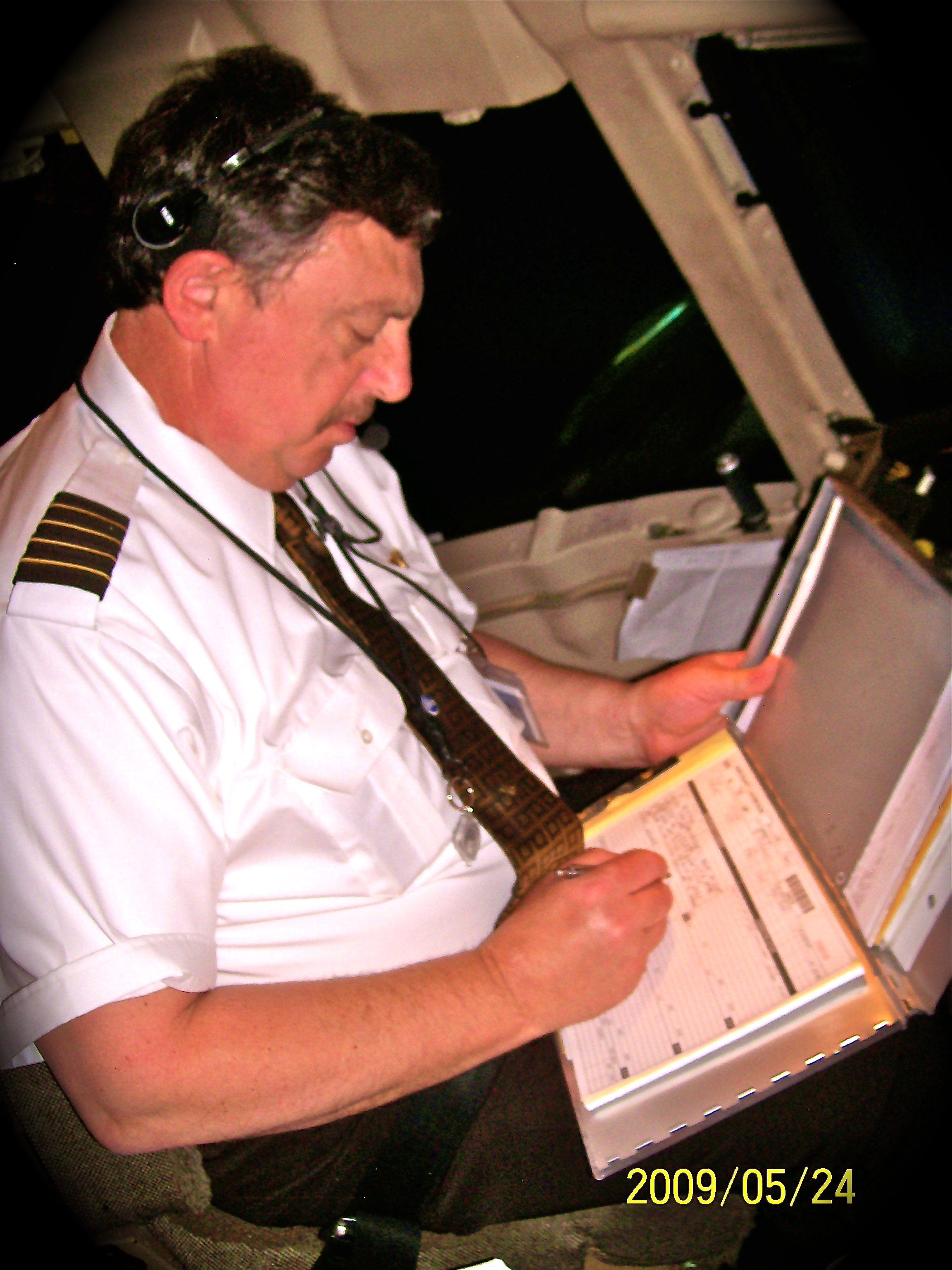
Captain Paul Miller preparing for a coming storm.

Recent passenger jet fires involving B787 Dreamliner have made news, but is it really new news? FAA and other regulators have dismissed the dangers of lithium-ion batteries when carried on cargo aircraft because. Why? Well, perhaps it is because fires on on cargo airline aircraft result in “no significant loss of life?” Isn’t this the legal reasoning offered by aviation officials when safety issues concerned cargo airline flights and not passenger airlines? That is right, cargo companies are called cargo airlines and operate under much the same rules as passenger carrying airlines.

But when a recent fatigue law was ruled not applicable to cargo airlines, thus cargo pilots, again by these same aviation officials, cargo pilots cried out, “Not fair to us!”

What they should have cried out should have been, “Not fair to the flying public!”

Yes, this ruling carved out an exemption from all sorts of safety rules for cargo airlines by aviation officials, from the same rules that will govern passenger carrying airlines. What I am arguing is this “carving out”process by aviation officials could well be seen as quite unfair to the flying public. How so you might ask?

Here are several examples. In 2006, lithium-ion batteries carried as cargo on a cargo airline caught fire in the air. A crew was hospitalized after they barely got the jet on the ground, that same aircraft finally being total destroyed by that fire.  The crew had to jump out of  cockpit windows to escape a burning smoke-filled aircraft.  Then again, four years later two cargo airline crews were not so lucky. In both of those cases in 2010 the fires were so quick moving and so intense, that despite their best efforts,  the crews of both aircraft perished in the fires while still in the air and then the cargo aircraft crashed.

Once again however, aviation officials, in a show of unprecedented irony, ascribed the events to cargo airlines and therefore not a passenger airline issue. Strangely enough however, the one common thread in these three stories are the batteries, the lithium-ion batteries. In each case, the batteries carried as cargo caught fire in the air and then caused massive fires inside the airplanes.  Despite the three known fires investigated by aviation officials, despite warnings going back to 2006 that these lithium-ion batteries can be very unsafe to carry in the air, these same aviation officials approved the use of these same batteries on the B787 Dreamliner. Not only was the approval for carriage of the batteries, but the approval was to hook up the batteries to the aircraft electrical system as electrical power sources, meaning that on every flight of a B787, there would be large lithium-ion batteries aboard and connected.

Many people would ask why this was done and why it was allowed to be done? My guess, and it is only a guess is that most likely, battery manufacturing experts explained to some aviation official lawyers, that these are somehow different batteries and different battery applications than those involved in the three cargo aircraft destructive mishaps. On paper, on a slide presentation in front of a room of officials, that argument probably, and obviously,  played well.

But in the end, the question remains now in the front of the minds of the public and press, “Are ‘Passenger Airline Lithium-ion Batteries’ the same as ‘Cargo Airline Lithium-ion Batteries’?” The events surrounding recent B787 lithium-ion battery related fires seems to raise serious questions about that question.

Maybe time and science and engineering will show us that this gendre of lithium-ion batteries can be made safe for the skies. That would be preferable for the future of the battery industry and the airline industry. But for right now, the question seems to be that they are similar enough in their fire catching characteristics to make all us in safety quite concerned?

Maybe these same aviation official lawyers can reconsider whether cargo pilots are somehow less susceptible to fatigue than passenger pilots and rescind the cargo carve out of the most recent fatigue rulings.100_3985 For it is in this transgression of logic that B787 Dreamliners took to the skies with lithium-ion batteries that may be the same type of batteries that brought the first of three cargo airline aircraft to destruction more that six years ago.

US Passengers at Risk by FAA Fatigue Rule

Passengers on domestic US airlines are now at an increased risk of being  crashed into by sleepy cargo pilots. Lawyers at the FAA used case law, negligence reasoning and other historically based legal records to reach a regulatory milestone, aligning witIMG_0922_2h lawyers at   large US based package express and airborne freight haulers. The FAA pointed out that so far, when cargo pilots have had fatal crashes, they have only killed themselves. But is the regulation a millstone around the necks of cargo pilots? Industry safety experts say the risk to the passenger flying public is very real. Fatigue caused human errors can lead to massive passenger casualties. Take for instance one of the worst commercial aviation passenger disasters in history. 583 people were killed when two heavily laden B747s collided in Tenerife in 1977.   It is believed that some of the crew members who may have been on duty in excess of 15 hours, in my opinion, misunderstood ATC communications. The KLM captain was very near the end of his official duty day, but believed that if he could get airborne before the end of his duty day, that he could complete the flight to Amsterdam with his load of passengers. A good man, a man dedicated to his company, a man with a great record at the company as a captain, under the fatigue caused misconception that he had been cleared to take off, although he had not, began his takeoff roll, colliding just moments later with a Pan Am jet on a fog shrouded runway.

Now imagine hundreds of fatigued cargo pilots operating around the clock due to this FAA ruling. Imagine a sleepy cargo crew misunderstanding an ATC radio call and ramming 850,000 pounds of plane, cargo and fuel into your family in a passenger plane innocently waiting to takeoff, albeit by accident, while seated on a passenger jet, one tightly regulated by the FAA. One thing will be for sure. The lawyers from the FAA and the cargo industry will be saying, “We need to do something about this.”

So, we have a chance right now to “do something about this,” and we ought to do it before we witness another tragedy such as Tenerife. The FAA should let the law of the people speak for the people. After all, it is their safety that is really the first priority, is it not? Cargo carriers have prospered under FAA safety regulations, countering the claims by their lawyers that safety would cost them business losses. Check their financial records. Now check the FAA and NTSB accident records. In fact the records show that  many if not most of the cargo crashes were the result of fatigue and other human factors, and not safety regulations. The ruinous losses of these accidents is in the hundreds of millions of dollars. And these are fully  documented losses of property and lives, they are not suppositions, arguments or cases put together in a law office.

This other “study” of potential business losses due to safety regulations is purely speculative, oppositional and entirely hypothetical. There doesn’t appear to be a shred of real evidence in the entire argument. So, I think that it is time that we base our decisions of safety, of life and death on reality, on data, on facts and on history and not on the unsubstantiated claims of lawyers, accountants and other business professionals.100_3975

Safety versus Everything Else not SMS

Safety Managers can sort through legalities by remembering what safety is and what safety is not. Safety is about prevention, human factors, reporting and investigating, fixing the problem, communicating and looking forward.

Safety is not about criminal law, civil law, administrative law or regulatory law; it is not about public administration or zoning around airports. It is not about public relations, disaster preparedness and actually, much to the surprise of many, it is not about accident investigation.

All of these subject areas may involve commercial aviation and we have to be about the business of managing all of these areas, but they are not safety management.

Safety management is now going through the SMS phase and that is mostly good. But there is a mystic which may confuse some, turn off others or gray the black and white lines of aviation safety.

Safety must foremost be prevention, prevention of hazards from becoming mishaps. Strong leadership in safety is needed to make prevention happen; it does not come naturally to us humans to prevent mishaps, we tend to trip and skin our knees, we do not always seem ready to prevent the trip and fall. But prevention is cheaper. Straightening a rug by a door is cheaper that sending a guest to the hospital with a trip caused broken bone.

Safety is really all about human factors or what we really know as human error. There is no mishap on record that did not hold human error to account. So prevention really does seem to be a human error issue, what can we do as flight crew to improve our human performance. Training comes to mind, procedures and checklists as part of that.

Safety is all about the reporter finding a hazard and yelling out loud, “Hey, here is a problem everyone!” Those of us gifted to see thing may see more, but everyone sees something. Encourage reporting.

Fixing the problem is critical, don’t just report the hazard. There is no one other than the safety manager who is more in charge at this point; this is your time to shine. Do the work corporately or by your own imagination- but get the work done to find the solution and pronto. Remember that the flight on which the hazard was found will be repeated in an hour, a day or a week. No time for waiting for “the system to work.” The system didn’t work and now is the time to step in and take action, work with others to take action, manage others who are taking action or foster the action takers to hurry up.

Communicating is how safety works. Remember that you both speak for the pilots and to the pilots. They speak to you. Keep those channels open and flowing. Do whatever is needed in your organizations culture to encourage communications. Remember also that Tweets, emails, Facebook, IM’s and every new electronic media is whats happening now.

Lastly, safety is all about looking forward to mishap free operations.  Consider everything you do as influencing a safer tomorrow. You will be one of the few who do.

Remember, do not get involved, sidetracked or distracted by what safety is not. As the safety manager, you are the only one doing those six safety goals leading you to the now SMS.

Alone in the sky with the sunrise.

More on AF 447 LOC: Stability, Vg/Vn Diagram and Recovery

There is another very important aerodynamic engineering issue that needs to be discussed when Loss of Control is the subject, and that is Stability, as it relates to high angle of attack flight. Transport category aircraft may not have the same “forgiving” stability as training aircraft, when it comes to bringing the aircraft back into the flight envelope, in the event that Loss of Control has taken the aircraft outside of the flight envelope.
Training aircraft are designed for students, so that they are designed to be easily recoverable from high angle of attack flight and out of controlled flight and flight outside of the flight envelope. The center of gravity, the aerodynamic center, the moment arms of the wings and fuselage, the control surfaces size, types, deploy-ability and locations, the aerodynamic and geometric wing twist, the wings’ angle of incidence on the fuselage and additional itens such as stall strips or other early stall initiation devices, are all assembled so as to make recovery from stalls, post stall gyrations and spins possible for students. This however is not how transport category aircraft are designed and assembled.

Rather, transport aircraft are commercial competitive aircraft, and as such, are optimized for L/D max  (lift/drag max) in cruise, that is the best lift for the cost of drag, for high coefficient of lift devices for take off and landing performance and for relatively good stability (In my opinion, slots, slats and similar devices are incorrectly called high-lift devices. Why? Because you really just want to get the same lift but at lower angles of attack.  They might be more properly be called high “coefficient of lift devices” where the coefficient of lift is maximized by camber and air channels, where the angle of attack is lowered).

But with long wings and long fuselages, when there are very long moment arms with large weights such as passenger/cargo payloads and massive engines, transport aircraft may not perform in the same docile manner as trainer aircraft, acrobatic aircraft and military tactical jets. For line crew members to expect transport aircraft to be as nimble and recoverable as trainers would not be realistic.

Stability is more challenging to engineer when the moment arms and weights get larger.  Recovery from the edge of the flight envelope, that is the Vg/Vn diagram or the Velocity vs G Loading diagram, is possible and quite satisfactory with most transport category aircraft.

But when a flight’s excursion goes well outside of the flight envelope, of the Vg/Vn diagram, when the transition is larger and the aircraft passes well through and past the edge of the envelope, then recovery back into the flight envelop, may not be as easy.

It may still be possible, but testing during development may not have been investigated or engineered. Recovery from outside the envelope may require much more aerodynamic knowledge than a pilot that is qualified just by the requirements of training by regulation may posses.

And if crew members do not possess that knowledge, then there is a problem, because the plane is outside the advertised limits of operation and they may be at a loss on what procedures to use next. So, now what?

Early morning sun rising through clouds.

In my opinion, when flight crew members get into the seat of a transport category aircraft, an aircraft  with dozens of people seated behind or into the captain’s seat of a jumbo transport category aircraft with hundreds of people seated behind, flight crew members should be prepared to focus 110% of their attention for the next eight to twelve hours on nothing but flying. Forget about casual conversation. Forget about big meals, you will not starve in 8-12 hours, a sandwich and coffee will do. Forget about all sorts of distractions. Flight crew members need to be focused on keeping the aircraft in the flight envelope by procedures and purely by procedures.

Flight crew members have to know the Vg.Vn diagram and know how to stay well inside of the envelop. Why? That reason is because it may be difficult, very challenging and for some and in some cases, impossible to get back into the envelope once having left the envelope! Is that what happened to Air France 447? I just don’t know, but many of the clues seem to point in that direction.

Flight crew members need to definitely keep the aircraft out of thunderstorms and out of harm’s way for any threat to control and stability. The commercial transport plane is not a trainer, it is not a jet fighter and it is not an acrobatic plane and it is most certainly not a test and development aircraft. It is a massive piece of machinery that has been designed to do one thing extremely well and that is carry large payloads over long distances at exceptionally efficient fuel costs. Attempting to do anything other than that with the aircraft just does not seem “like a good idea.”

As far as members of various boards of investigations are concerned, if board members do not know the aerodynamic principles and physics of large transport plane flight, then it would behoove the board to bring in people who do know these things, such as pilots. Investigations that do not cover this subject area, when part of the flight, especially the fatal last few minutes, occurs outside of the VgVn diagram, are incomplete and therefore as of yet,  little safety value.

These investigations in my opinion are not for the purpose of assigning blame and forming the basis for further legal actions such as dismissal, monetary damages and fines. Lawyers and courts do that kind of work and the case history for lawyer based investigations and court awarded compensation in the Western world goes back hundreds of years.

Instead, these safety investigations are supposed to be about what went wrong and how do we keep this from happening again. They should be about safety.

Whatever the SOP, whatever the aircraft hand-book, whatever the company training program, something was not right in this case and it was up to the board to find that out. But did they find out what was wrong and did they inform everyone else who conduct flight ops with this equipment, on these routes, with these aircraft, how to do so safely? Or did they leave more questions unanswered? Why is the interest in this subject still so high?

How many times have we been given reports of aircraft mishap board investigations stating that something went wrong, and then that they advise someone else, such as the operator, the regulator or the manufacturer to figure it out?

This is incorrect safety investigation theory and procedure. In my opinion it is the duty of the board to find out what went wrong first and then to recommend actions to correct that situation, those SOPs, the aircraft handbook and the training process.

So, to proceed, would not the board need to understand “what went wrong?”

To understand “what went wrong”, investigators would have to know the aerodynamics of high angle of attack flight, the subject of aerodynamic stability, the idea of the Vg Vn diagram  and flight envelop and the entire concept of controlled flight for jumbo transport aircraft.  They also would have to reaffirm that all flight crew members need to know this information through training with their report of the mishap.

Again, JMHO. What do you think? Hey, we are pilots, we have to know this stuff. Shouldn’t the investigators be required to know this stuff as well? How else can they unravel the mystery of a mishap investigation? How else can we move forward to make commercial aviation as safe as possible? How else can we climb into the captain’s seat and take on the responsibility of being a commercial airline captain?100_0306

AF 447: High Altitude Stall or Swept Wing Stall? Did the Mishap Investigation Boards Make a Fundamental Aerodynamic Error?

The mishap investigation boards have given a less than
aerodynamically correct presentation of “high altitude stalls” in the 2009 Loss of Control LOC mishap investigation of AF 447 and the  2005 Loss of Control LOC mishap in Venezuela of a West Caribbean Colombian MD82.
The result is that these mishap investigation reports are not putting out satisfactory recommended corrective actions.
Here’s the problem: Swept winged aerodynamics differs from straight winged aerodynamics. Swept wings stall at the tips first. Straight wings stall at the root first. Swept wings pitch up when they stall. Straight wings do not. Swept wings tend to go deeper into the stall. Straight wings do not.

Pilots of swept winged transport category acft need to know this because many of these pilots received their basic and primary instruction in straight winged trainer
acft, and as such have learned straight winged stall recovery procedures.
Pilots who are now operating swept winged acft, who have not had
specific swept winged stall recovery procedures training per se, may not be adequately trained to handle a swept wing stall.
The various LOC mishap reports of the Colombian MD82 and AF 447 make reference to a problem the boards call “high altitude stall.”  This is really just an explanation that at high altitudes, the spread between true airspeed and indicated airspeed causes longitudinal pitch changes to feel exaggerated. But that extra pitch feel exaggeration is not the problem that keeps the acft stalled from loss of control at FL 370 to impact. What keeps the acft stalled is high angle of attack. The stall is the result of longitudinal controls being in the what is known as the region of reverse control, where the acft is on the back side of the power curve. This means that drag produced by the production of lift, induced drag, is so large, that it is greater in magnitude than the thrust available from the engines, meaning that even at full throttle, the pilots must push the nose down, in order for gravity to add force to thrust, to accelerate the acft forward to a speed great enough, and an angle of attack low enough, to bring the aerodynamic force vector vertical enough so that induced drag is lowered enough so that thrust can now accelerate the acft back into the normal one g flight envelop.

I apologize to all for the very long statement above, especially if it is confusing. In layman’s terms, the pilot has to push forward to get the plane going fast enough to begin flying again.

The boards should have cited swept winged stall and failure to employ swept wing stall recovery procedures as the mishap cause. Recovery procedures for swept wing stalls are different from procedures from recovery procedures for straight wing stalls.
Notice that when both AF447 and the Colombian MD82 descended through lower altitudes, they remained stalled and did not recover. The stall was not a result of high altitude, but high Angle of Attack. In both cases, if the correct swept winged stall recovery procedures had been used, the pilots could have recovered the acft, would have recovered the acft at much higher altitudes than the terrain CFIT and would have recovered the acft immediately, in my opinion. Stall recovery comes by lowering the angle of attack, not by lowering the acft altitude.

This is very important information and needs to be put out.

When a swept wing stalls, the stall emanates at the trailing edge of the wingtip due to span wise flow thickening the boundary layer. The aileron is actually one of the first wing components affected by a swept wing stall. As the stall progresses back up the wing, the aerodynamic center (AC) shifts forward, raising the nose and angle of attack (AoA). This causes the angle of the aerodynamic force (AF) to shift aft, resulting in a rapid and high rise in induced drag (Di), the horizontal vector component of AF. This induced drag opposes thrust, slowing the acft further and raising the AoA, deepening the stall.  This is known as the Region of Reverse Command or the back side of the power curve. Because induced drag rises and rises quickly, there may not be enough power alone to thrust the acft to a higher speed.

The stall is AoA dependent, not altitude dependent. The thrust available is limited by altitude, therefore the thrust deficit above induced drag is altitude dependent. Therefore the only recovery possible is to dump the nose down, reduce the AoA, reduce Di low enough, to where available thrust, as it is added, is sufficient to overcome Di and parasite drag Dp and accelerate the acft Indicated Air Speed (IAS) fast enough to regain lift and therefore one g level flight.

This is the only recovery possible. Swept wing aero is so important to know, that the US Navy has an entirely separate course on it, and it is taught after a flight student has learned to fly straight winged aerodynamic acft. In straight wing aero, the stall begins at the wing root instead of the tip. The AC as a per centage of the mean aerodynamic chord does not shift much, thus AF doesn’t shift aft and doesn’t result in a rapid rise in Di, slowing the acft further. Recovery is quicker with lowering the AoA, adding power and quickly regaining IAS.
Is it possible that the crews of neither of these LOC mishap acft received training in swept wing aerodynamics and the stalls that occur to swept wings?

There is a lot to know in swept wing aerodynamics that is different from straight wing aero, quite a bit to learn (I’ve only touched on it here). This knowledge is critical to understanding swept winged stall recovery procedures and successfully implementing them.

See “Aerodynamics for Naval Aviators,” by H. H Hurt Jr, NAVAIR 00-80T-80, Jan 1965, Naval Air Systems Command,  page 353-354, concerning the “Region of Reversed Command.”

http://www.faa.gov/library/manuals/aviation/

Pilots have got to know this swept-winged aerodynamics if they are going to fly swept winged aircraft safely in all situations, I believe.

In my opinion, this is especially true, if they chose to become test pilots by conducting uncertified operations into FL 600 thunderstorms or operating acft over the certified gross weights indicated for altitude.

Let me know what your thoughts are. Thanx, Paul

Safety Purpose vs the Legal Purpose: Why the Safety Purpose Works: are you looking and leading forward or backward?

Safety Purpose vs the Legal Purpose: Why the Safety Purpose Works: are you looking and leading forward or backward?

The Safety Purpose seeks the cause of mishaps and tries to determine procedures to immediately and forever prevent a re-occurrence. The Legal Purpose on the other hand attempts to find fault or blame for injury and damage and assign penalties.

But there is one other very significant characteristic that safety managers need to know in order to do their job successfully, to be winners and lead their organization into a mishap free future. Here it is in a nutshell:

Lawyers only look backwards in time, never forward. When a lawyer says, “The ice crystal icing is new,” what he/she really means to communicate with you is that this subject area before has never shown up in court previously in a negligence case. There is no case history of this type of event.” We have recently heard a statement similar to this in AF 447 reports.

The event of ice crystal formation around the clouds of very tall thunderstorms is as old as the natural history of the earth, that is tens of billions of years old. Scientists of meteorology physics have shown us this in lab experiments and field observations. Teachers of pilots have been warning students to not only stay out of thunderstorms, but to say away from the high overhang of the upper clouds as well. This is nothing “new,” and pilots who desire to have a long career have paid heed to this advice for decades.
This is a good example of why lawyers running safety programs is a flawed concept. In law school, lawyers are taught to only look backwards.

THE SAFETY PURPOSE on the other hand, looks forward. Safety looks forward toward accident reduction, toward hazard resolution and the huge financial savings of mishap-free flight operations. So safety was achieved in flight school by educating pilots in the future to stay clear of thunder storms and avoid the overhangs. Not only can the ice crystal threat of the overhang be a hazard, but often hail showers can be located in these areas.

The flaws in the fostering of the Safety Purpose at BEA, AF, AB and other organizations such as FAA may very well be rooted in this very basic differential theory of management.

It is my opinion that the forward view found in SAFETY THEORY is of much more value to the commercial airline industry that the Legal Theory of finding fault and assigning penalties.

My guess is that airlines with safety people in charge of safety programs do a heck of a lot better than those with lawyers trying to run things. My guess is that the safety people at the regulatory authorities do a daily, albeit losing battle with the attorneys that have taken over positions of upper management.

JMHO, of course.

Is Safety Guilding the Lily or Is Safety Making Necessary Operational Improvements?:Who has the better argument?

I think that we have to rethink this logic ladies and gentlemen. Safety recommendations do one very special thing that no other recommendation does. Safety recommendation give us SOP modifications, checklists and limitations that help us to do our operation more correctly.

Some of you may say, “Don’t you mean more safely?”

I would respond by saying, “No, not more safely, but more correctly.” Why? Remember that our stated goal in all operations is safety-not 90% safety but 100% safety.

So when we figure out how to do operations safer, it is really most often soon adopted as SOP. Safety finds new and better ways to operate and then training, ops and standardization offices figure out how to turn that “safety innovation” into a New SOP, limit or checklist.

Right? Isn’t our SOP being revised all the time? Aren’t our Jeps procedures being revised regularly? Do we not see constant improved regulations all the time?

Did all of these improvements in SOP, Jeps, limits, regs really cost us all that much money? How much money did we waste to mishaps using flawed SOP’s?

So Safety is not as expensive as some would try to make us believe. In fact, more often than not, safety has reduced our costs, reduced our expenses, make our operation more correct, effective and greatly more efficient.
Remember the sight of the Delta L1011 crash in Dallas on the front page of the papers? Remember the United DC 10 crash in Sioux City all over every TV stations for weeks? Look at Tenerife, a classic air tragedy. Look at TWA 800; all over the news for months. Look at the dozens and dozens of microburst related mishaps and the hundreds of dead.

Safety helps us to do our job better. Do those that claim that “safety is guilding the lily” with unnecessary and expensive changes really have a case?

Does their argument really “hold water?” In fact hasn’t safety made our operations more correct?

Cost and Benefit Analysis vs Successful Safety Programs: Is the FAA and A4A Using Flawed Logic to Manage Safety Improvements? Do Pilots Actually Know Safety Better?

Air Transport Association (ATA), or now Airlines for America (A4A) and the FAA can not claim all of the credit for the huge improvement in airline safety over the last decade in my opinion. As a matter of fact and record, both the FAA and ATA now A4A, opposed, and opposed with great vigor, virtually every safety of flight recommendation from pilot groups and pilot associations, from individual pilot recommendations directly to the FAA and/or the employer company, from the NTSB and from just about every safety foundation, association and organization, not just in the last decade, but in the rememberable history of this writer. It has only been after sustained high levels of Washington lobbying, high profile professional papers delivered, public relations campaigns and other dedicated efforts that the FAA has agreed to any safety regulatory or legislative improvements and on the part of commercial companies, after very tough pilot associations legal negotiations for contractual safety improvements.

Examples? Collision Avoidance Systems (TCAS) for Cargo, Flight Duty and Rest Regulations, Improved Flight Crew  Training Requirements, Cockpit Smoke Equipment, improved security, higher ATC standards for aircraft handling and routing around severe convective weather, Aircraft Rescue and Firefighting (ARFF), Crash Fire and Rescue (CFR) at airport equipment and manning requirements and training, hazardous materials air cargo handling rules, regulations and laws.

Again, these are but a few of the many safety improvements worked for by commercial pilot associations, pilot trade groups, as well as various global flight safety oriented foundations.

Now let’s talk ASAP, the Aviation Safety Action Program. The joint commercial pilot working group worked 1993 to Sept 1995 on the Proposed Draft FAA Advisory Circular for Airline ASAP, based on the prototype successful program established by American, Allied Pilots Assn and the FAA Southwest Region. The FAA however sat on that AC, until publishing their first draft in Oct 1998 . The Final ASAP Advisory Circular appeared I believe in 2001. Many airlines then fought ASAP participation until finally agreeing and adopted ASAP in the mid 2000’s, fully ten years after it was recommended.

So I would challenge anything stated about safety by the FAA and A4A in terms of their advocacy and management thereof. In fact the FAA and A4A opposed ASAP and virtually all of these safety programs that eventually became very valuable programs.  Could it be argued that FAA and A4A are anything but an impediment to airline safety?

Oh, one more important point. All of the safety recommendations made by pilot associations and adopted as regulation, rule or law, have worked!!  I would argue that this is why the commercial airline industry is safer today than 10 years ago. That is why we are safer today than ten years ago, not because the FAA and A4A have argued the supposed “Cost and Benefit Analysis” at every safety program proposed.

It is my opinion that lawyers for the FAA and A4A have used “Cost and Benefit Analysis” in some cases to delay safety programs and have not, in so doing, protected the industry from costs. Quite the opposite is true in my opinion. This delay may have actually led to repeated human factorsmishaps of the same type being suffered throughout the industry again and again without resolution.

These costs related to commercial aviation disasters have wreaked financial havoc in the commercial airline industry by allowing hundreds of millions of dollars and hundreds of lives to be wasted, while substituting legal wrangling and administrative procedures to take precedence over safety.

For safety, look to the person with a personal stake in the argument and improvement.  Do not look to the supposed “Cost Benefit Analysis” argument for any value in safety.

AF 447 and AF Global Operations Center: Is there a Connection?

Airline Dispatch Office at the airline global operations center has current satellite imagery in real time of weather along the route of all flights.

I wonder if any manager at the home office has yet been able to put two and two together and say, “Ah HA!! So that is why we have all of these fantastic latest scientifically correct current actual satellite pictures from space, displayed in real time right in front of us on television screens.”

“I think it is so that if we see something dangerous out ahead of one of OUR flights, we can use these radios and other real-time telemetry data channels sitting here in the console right below the television screens to communicate with OUR captain of OUR flight to warn him or her of the danger, such as an area of 60,000ft to 70,000ft thunderstorms in their course ahead and recommend a safe course of action. Am I right or what?”

Hmmmmmmmmmmmmmm.

Actually in some cases, the display is on current LED screens and the communications function is fully integrated into the LED screen.

Is the airline dispatcher and the valuable weather information available at their finger tips being overlooked in the typical rush to find “pilot error?”

Is SMS Working to Make Your Company Better?

Safety is like virtue, in that safety is its own reward. Here are a few additional self audit questions that supplement those provided as policy guidance by Flight Safety Foundation President Bill Voss  [in the May 2012 edition of AeroSafety World http://flightsafety.org/aerosafety-world-magazine/current-issue%5D:

1. Is a safety program valuable and working or is it a well documented paper work of art?

2. Is the safety manager someone everyone knows, who is out and about everyday tracking down and eliminating hazards and communicating with anyone and everyone OR is the manager writing glowing self-appraisals in an office away from the operation?

3. Is the safety program in place to serve the interests of the company that is to save the company the enormous costs of the injuries and damage caused by accidents and the time wasted investigating these OR is the safety program self serving and in many ways in opposition to or in conflict with the company, standing in the way of aggressive and innovative operations?

4. Is the safety program engaged with every employee and member of the organization, every manager, supervisor and administrator OR is it a window dressing program ready to display to the next outside inspector, auditor or investigator?

5. Is the safety program constantly reinventing itself, finding what else is wrong and fixing it, keeping one step ahead of the next mishap OR is it too busy investigating last month’s accident to be involved in preventing next weeks mishap?

In my opinion, if you add these five questions to the great audit base recommended by Flight Safety Foundation President Bill Voss, you might be able to use SMS as a way to make your company better and better, year after year.

Remember that Safety, like virtue, is its own reward.